

Glass sliding walls: how to keep your veranda usable all year round
With glass sliding walls a cover becomes a garden room where you sit from March until late autumn. How they work, what they do against wind and cold, and how to combine them with shading and heating.

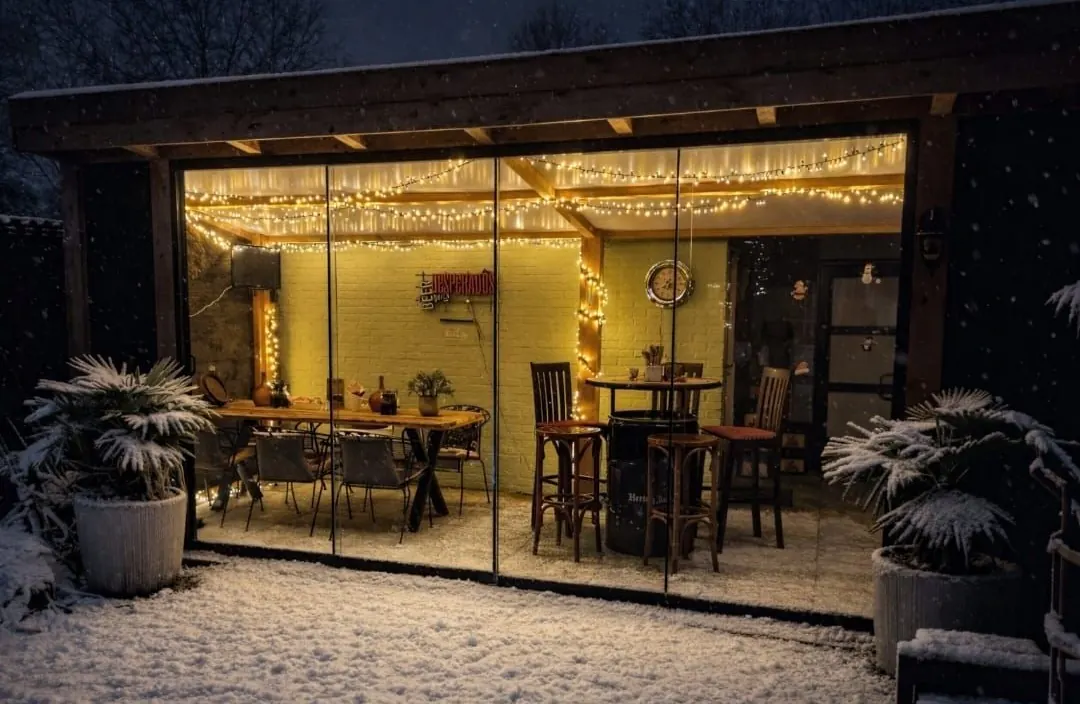
A cover keeps the rain off, but not the wind. It is precisely that wind that decides whether you still sit outside in April or October. Glass sliding walls solve that without taking away the feeling of being outdoors. As an installer I fit them almost daily, often under a veranda that has been there for a few years. This is what you can expect from them.
How a glass sliding wall works
A sliding wall consists of separate glass panels running in an aluminium bottom and top rail. Each panel has its own track. That lets you slide them open one by one and stack them on one side. Fully open you have a free patio; fully closed a sheltered room. And everything in between is up to you.
The glass is laminated safety glass; the profiles are slim so the sight lines stay calm. We supply our systems in several colours, matching the frame of your veranda in anthracite, black or cream.
What they do against wind, rain and cold
With the panels closed a veranda is virtually wind- and rainproof. You notice that immediately in spring and autumn: without wind, 14 degrees feels very different from 14 degrees with wind. The sun coming in through the roof and the glass warms the room up like a conservatory.
A few honest notes:
- A sliding wall is not an insulated facade. It is an outdoor space you can use for longer, not an extra living room in January.
- There is a small gap between the panels; it provides ventilation and prevents condensation. That is by design.
- On the windiest days of the year there can be some draught. Our systems are made for Dutch weather conditions and remain stable and safe.
From spring to winter: how to use the garden room
Spring. Panels closed, the first sun warms the room. This is when customers message us most often: "We're sitting outside!"
Summer. Everything open. Combine with sun shading above or below the roof, or a zip screen on the sunny side. That keeps it cool without losing the view.
Autumn. Panels closed on the windward side, one panel open for fresh air. With a patio heater or an infrared panel you sit without a coat well into November.
Winter. The garden room keeps the patio furniture dry and clean. On a sunny winter day it is surprisingly pleasant, and with LED lighting it is a place to sit in the evening too.
Combinations that work well
| Combination | Why |
|---|---|
| Sliding wall + sun shading | Prevents overheating in summer; sun shading from €1,149 |
| Sliding wall + zip screen | Extra shading and privacy on the open side |
| Sliding wall + LED lighting | The garden room becomes a real room in the evening |
| Sliding wall + heating | Extends the season the most; ask for advice on the power |
Also under an existing cover
Most sliding walls we install under verandas that are already there, including other brands or wooden ones. We always measure on site. If the floor or the posts are not perfectly straight, we solve that during installation with fitting pieces. Installation usually takes one day.
Maintenance
Very little. Rinse the bottom rail now and then so that leaves and sand do not hinder the wheels, and wash the glass like an ordinary window. That is all.
What does it cost?
That depends on the number of sides, the width and height, and the number of panels. After a free site survey you receive a tailored quote, usually within 2 hours of the conversation. You get a warranty on the product and on the installation, and you only pay after delivery.
Curious whether your cover is suitable? Request a quote or see the projects we have already installed.
This article is general information, not legal or structural advice. Rules and prices can change; we assess your situation during the site survey.
Trained as a carpenter, now a specialist in aluminium canopies and glass sliding walls.
Read next
All articles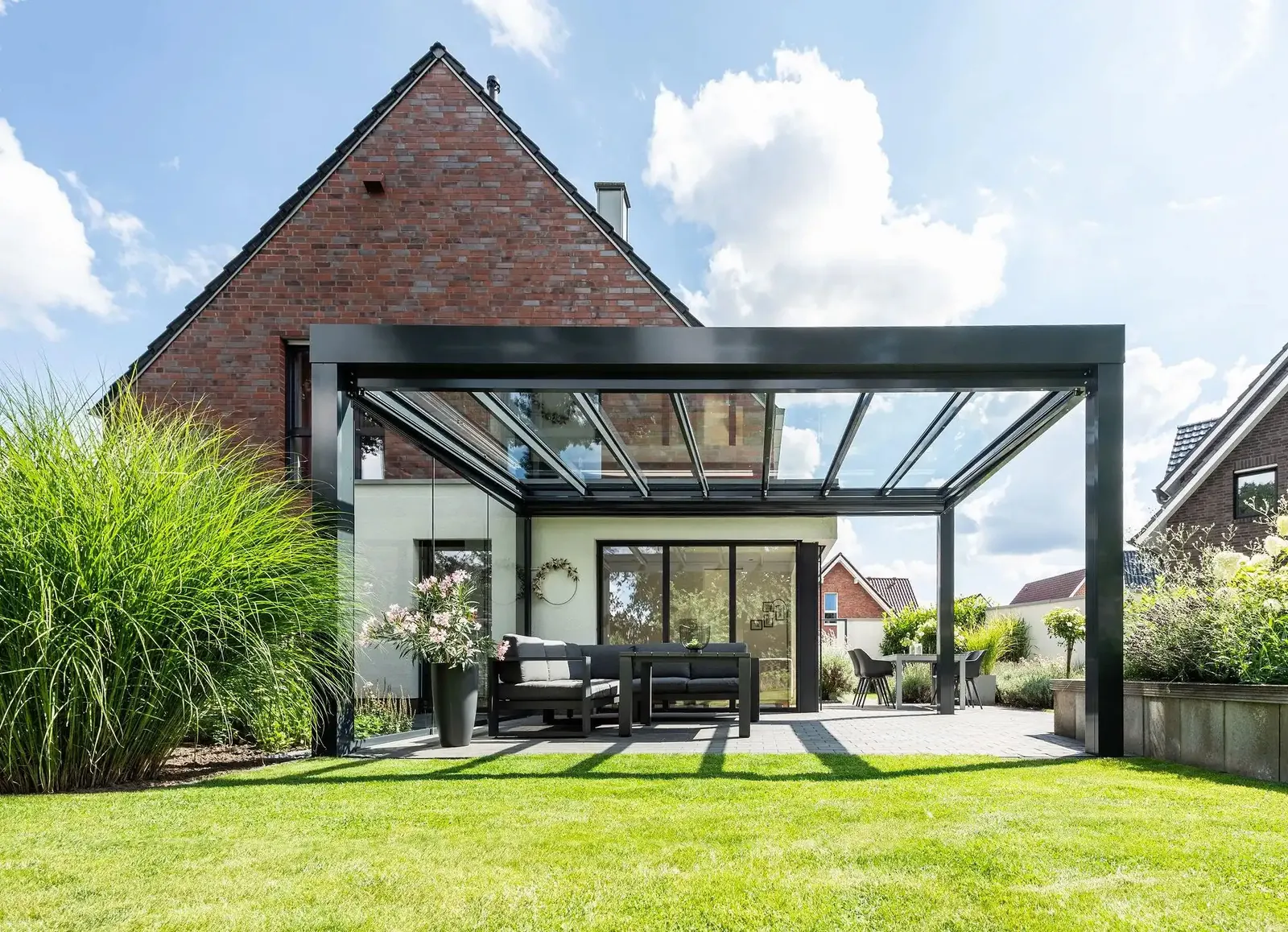
Permit for a veranda: when do you need one and when not?
Many verandas and patio covers may be built without a permit, but not all of them. Read which factors are decisive, where to check for certain and how we help you during the site survey.
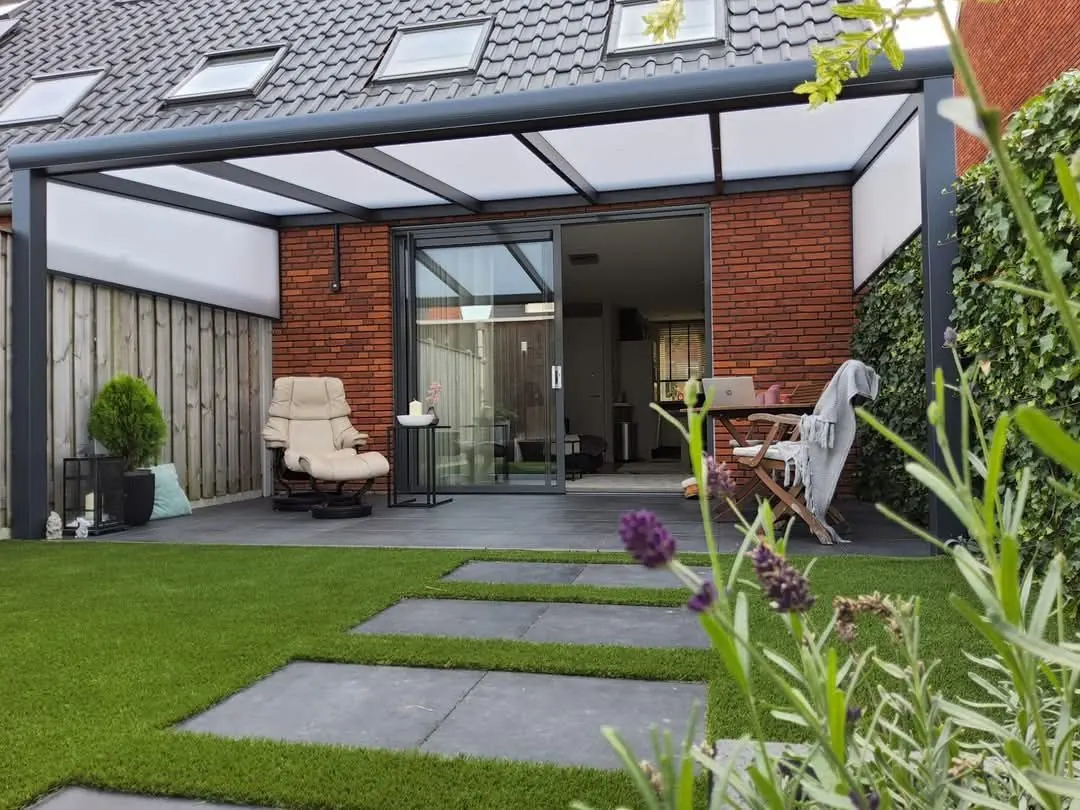
Polycarbonate or glass roof: which suits your garden?
The roof determines how your veranda feels: light and open, or cool and sheltered. We compare polycarbonate and glass on daylight, heat, maintenance, noise and price.
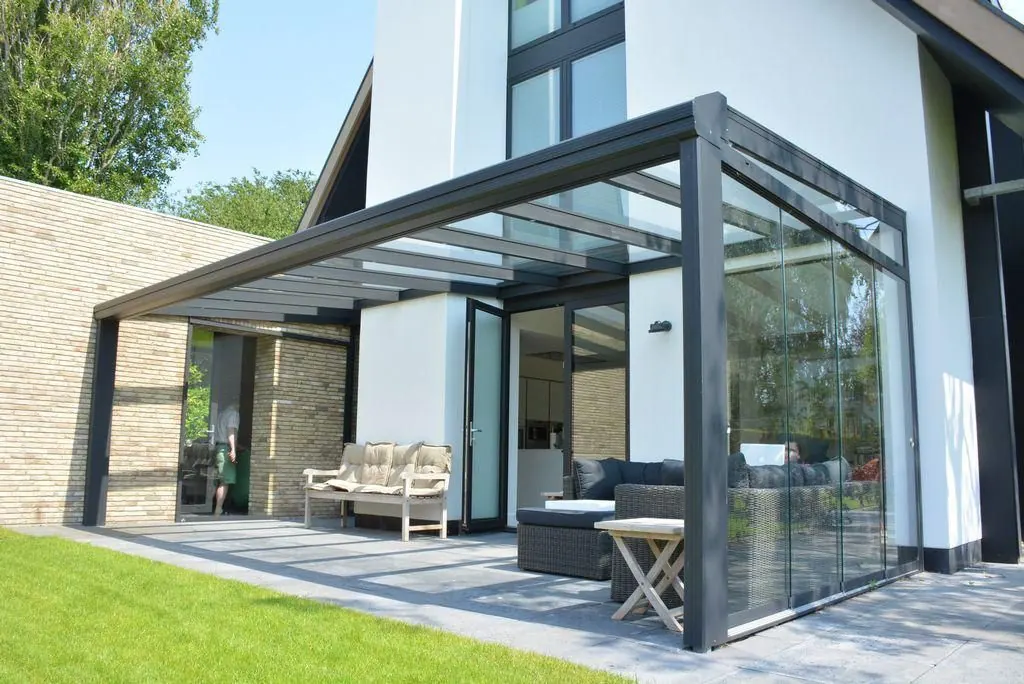
Veranda costs in 2026: what determines the price?
What does an aluminium veranda cost? It depends on the size, the roof, the colour and the options. This article explains which choices drive the price and how to compare quotes fairly.